Key Takeaways:
- Identify whether your floor is finished with Hardwax Oil (Osmo) or Lacquer (Bona) before cleaning.
- Avoid ‘wet mopping’ at all costs to prevent grain raising and timber swelling.
- Regular buffing and ‘refreshing’ coats can extend the life of your floor by years.
- Moisture content management is key to preventing gaps during Kent’s humid seasons.
The Problem: Rapid Wear on Beautifully Sanded Floors
You’ve invested in a professional restoration for your Kent home, but within months, the high-traffic areas are looking dull. Scratches from pets, ‘micro-abrasions’ from grit brought in from the garden, and the wrong cleaning products can quickly strip the protection from your timber. Most homeowners in Sevenoaks or Canterbury use standard supermarket floor cleaners, which are often too acidic and eat away at the finish.
The Risk: Irreversible Water Damage and Grain Raising
If the protective layer is compromised, moisture can penetrate the timber. This leads to grain raising, where the wood fibres swell and create a rough texture. In extreme cases, frequent use of a wet mop causes the timber to cup or even crown, leading to structural damage that can only be fixed by another full, expensive sand. Without a proper maintenance regime, you are essentially watching your investment disappear.
The Solution: Specialist Maintenance & Curing Protocols
Professional maintenance is the secret to a lifelong floor. At floor sanding Kent, we advise our clients on specific aftercare based on their finish. For floors treated with Osmo Hardwax Oil, maintenance is a dream if done correctly. Unlike lacquers, oils can be spot-repaired. Using Osmo Wash and Care (a PH-neutral soap) is essential for daily cleaning.
Pro-Tip: The ‘Refresh’ Coat
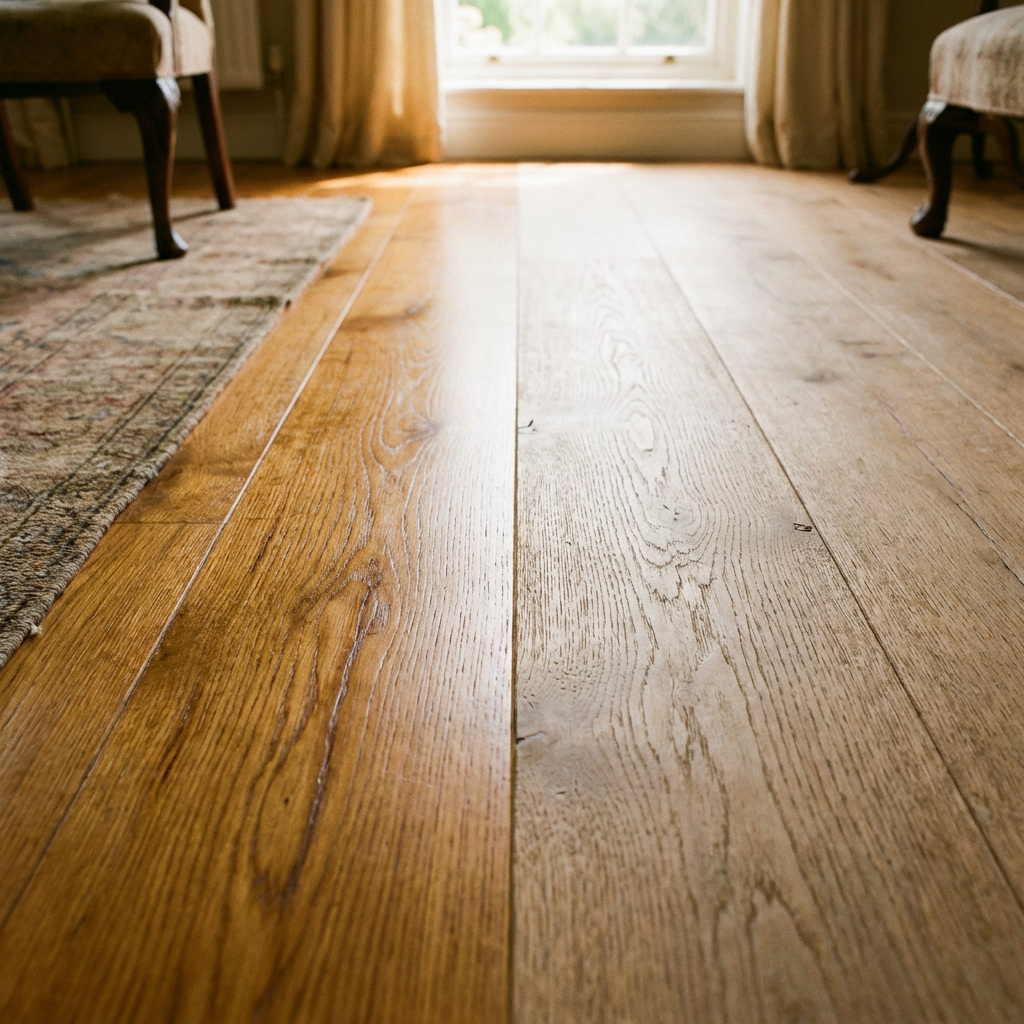
Every 12-18 months, an oiled floor should be treated with Osmo Liquid Wax Cleaner. This replaces the wax lost through foot traffic. For lacquered floors (Bona Traffic HD), we recommend a ‘screen and recoat’ every few years. This involves a light buff with a 120-grit screen to remove surface scratches, followed by a fresh top coat of lacquer. This avoids the need for a full sand-back to raw timber.
Be aware of tannin pull when working with oak. If you use too much water during cleaning, the naturally occurring tannins in the oak can react and cause dark staining. Always use a ‘damp’ (not wet) microfiber mop and professional cleaners designed for timber.
In Kent’s coastal areas like Margate, the high salt content in the air and the fine sand tracked into homes can be particularly abrasive. We recommend high-quality walk-off mats at all entrances. For more help on keeping your floors in peak condition, explore our guides on dust-free wood floor sanding and wood floor finishes. For more complex projects like parquet floor restoration, always consult a professional tradesman.
For more technical aftercare data, you can visit the Bona wood floor products website.