Expert Church Floor Sanding in Kent | Heritage Floor Restoration
From the flint-and-ragstone parish churches scattered across the North Downs to the timber-framed chapels of the Weald and the wide Victorian naves built for the fast-growing towns of Maidstone, Tonbridge and Ashford, Kent’s churches carry centuries of history in their floors. Many of these buildings — some Grade I or Grade II listed — have timber floors that have absorbed the footfall of christenings, weddings, funerals, harvest suppers, polling days and parish coffee mornings for well over a hundred years. It’s no surprise that so many are now showing their age.
We’re based in Maidstone and have spent over two decades restoring wooden floors in Churches, homes, schools and public buildings across the county — from the Medway towns and Dartford in the north, to Canterbury, Faversham and the Romney Marsh churches in the east, and out to Sevenoaks, Tunbridge Wells and the Weald in the west. Whatever style of building your church is — a Norman flint nave, a Victorian town church, or a 1960s community-hall extension — the same principles apply: understand the timber, work with it rather than against it, and finish it in a way that will genuinely last.
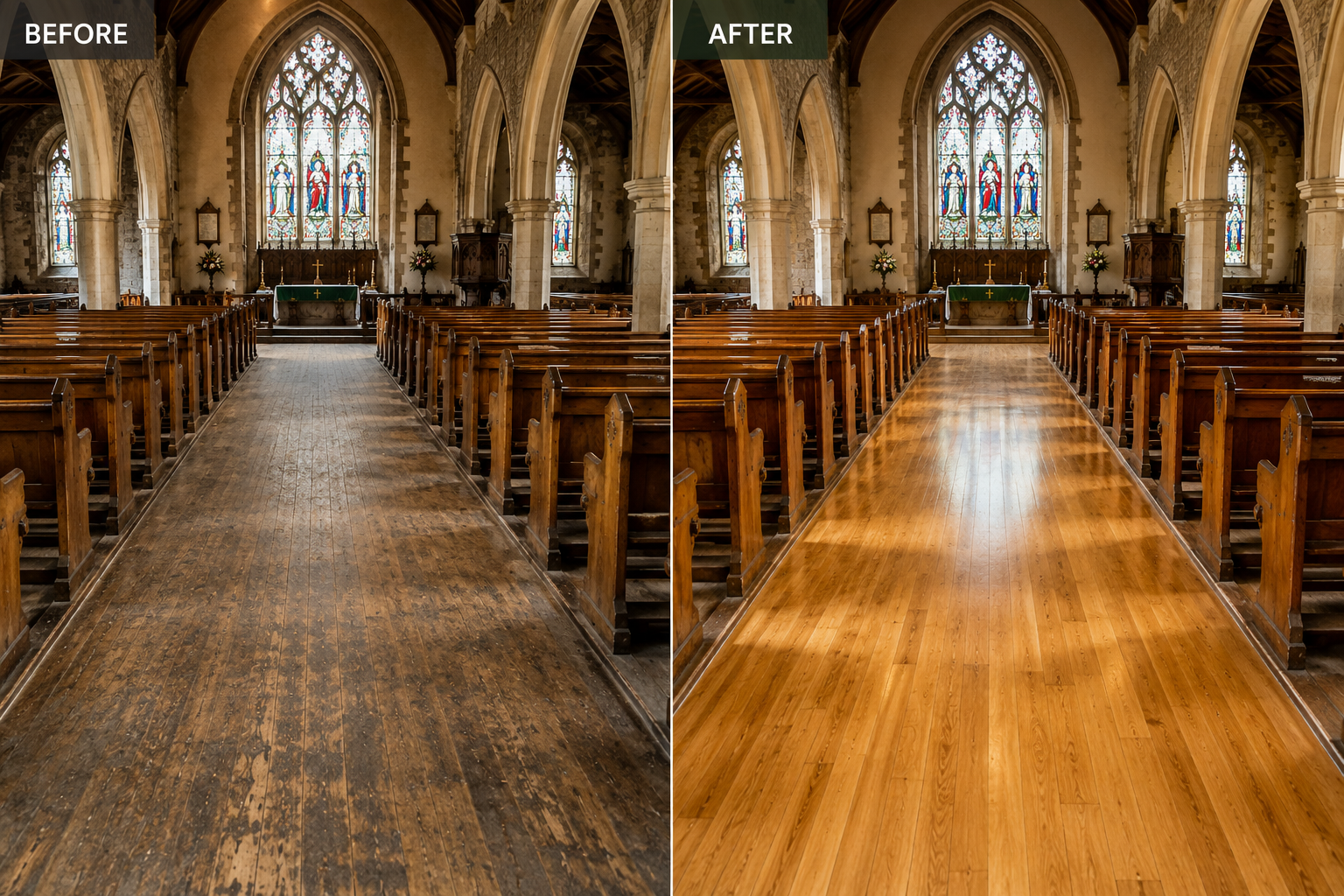
Before & After: Professional church floor sanding and restoration, transforming a heavily worn timber aisle into a beautifully refinished wooden floor with a durable satin finish that preserves the character of this historic church.
Why Kent’s Church Floors Need a Specialist’s Eye
Church floors are rarely straightforward. Many parish churches have a mix of timbers under one roof: original pitch pine boards in the nave, later parquet blocks laid over a concrete slab in a Victorian or Edwardian side aisle, and a completely different floor again in a more recent hall extension used for toddler groups, choir practice or Sunday school. Each of these needs a different approach.
Loose or “drummy” parquet blocks are one of the most common problems we find, usually caused by a failed bitumen adhesive or historic damp coming up through the slab. Floorboards suffer differently — seasonal movement between a cold, unheated week and a heated Sunday service causes boards to expand and contract, opening up gaps that let in draughts and catch heels and walking sticks. Older coatings compound the problem: layers of dark varnish, wax or even paint on chancel steps can hide the true condition of the timber underneath, and any old paintwork needs to be checked and handled carefully before sanding begins.
Then there’s the practical reality of the building itself. Ledger stones, brass memorials and floor-mounted heating grilles are often set directly into the timber or stone flooring and need to be protected, not sanded over. Pews may be fixed to a raised platform that has to be worked around, or removed and reset. And because many parish churches are listed buildings, altering the floor — including some resurfacing work — may need to go through the faculty jurisdiction process, with the Diocesan Advisory Committee (DAC) asked to comment on proposed materials and methods. We’re used to providing the product data sheets, method statements and photographs that DACs in the Diocese of Canterbury and the Diocese of Rochester typically ask to see, which helps keep that process moving smoothly.
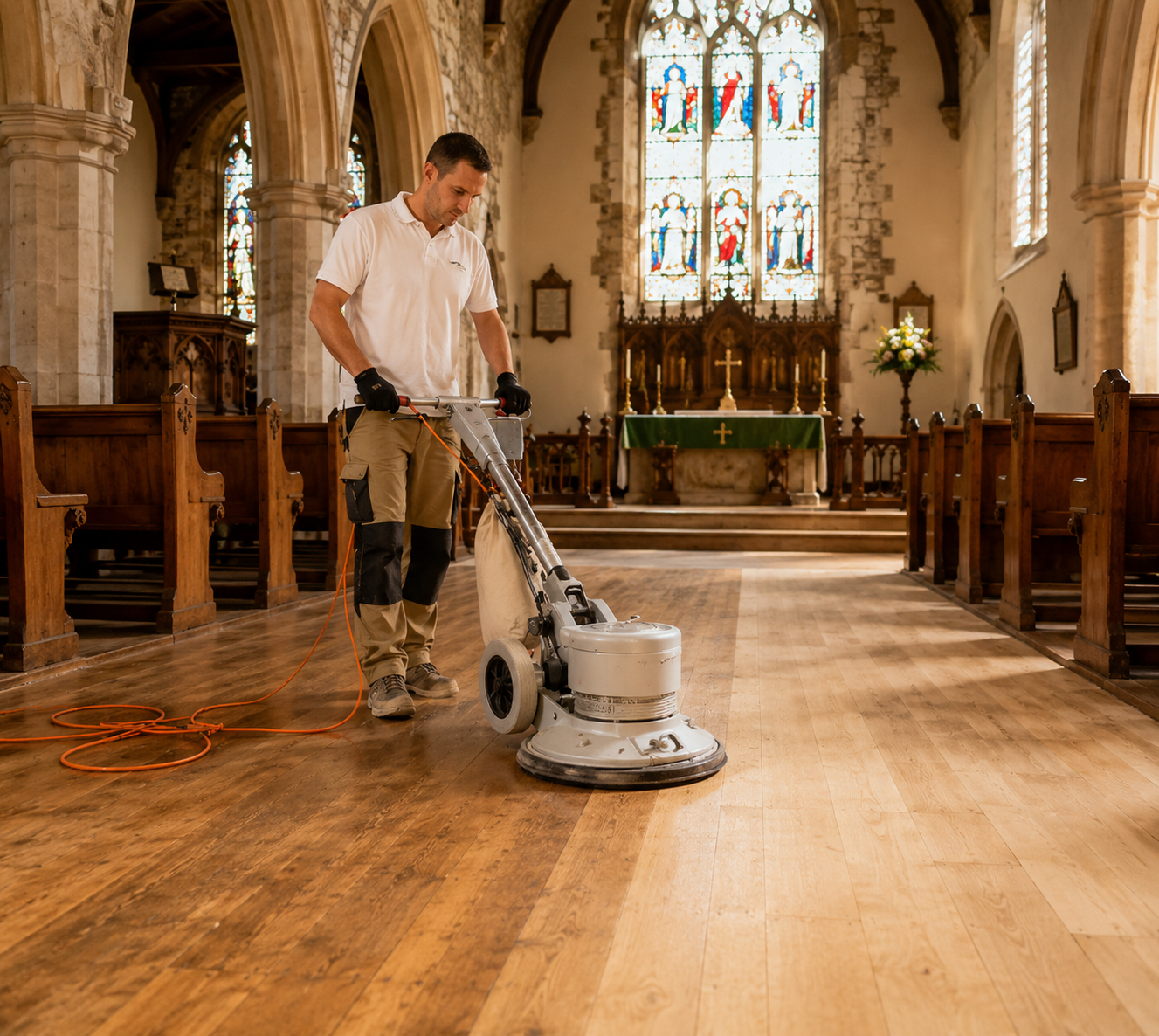
Professional church floor buffing and maintenance using a commercial rotary machine to restore clarity, improve durability and preserve the natural beauty of a historic timber floor.
Our Church Floor Restoration Process
Every church floor is assessed and treated on its own merits, but the process generally follows five stages.
1. Initial Assessment and Planning
We start by understanding the floor itself — timber species, age, coating history, and how the boards or blocks are fixed down. For many churches, we can carry out a preliminary assessment from clear photos and a few key measurements sent by WhatsApp or email, which is often enough for an accurate, no-obligation estimate. Where there are signs of movement, damp, or loose parquet, or where the building is listed, we’ll arrange a site visit to check moisture content, subfloor ventilation and timber condition before any work is agreed. This is also the stage where we plan around your calendar — services, weddings, funerals, choir rehearsals and any regular lettings — so the work causes as little disruption as possible.
2. Repairs, Board Replacement and Gap Filling
Loose parquet blocks are lifted, cleaned of old adhesive and re-bedded, or replaced with reclaimed or matched blocks where damage is beyond repair. Damaged or rotten boards — most often found near external doors, under old rainwater leaks, or close to historic pipework — are cut out and spliced with timber matched to the existing profile and species wherever possible. Gaps between boards, common in pitch pine floors that have moved over decades, are filled using resin-and-sawdust fillers or slivers of matching timber rather than generic mastic, keeping the repair sympathetic to a heritage floor. Ledger stones, memorial brasses and any fixed fittings are carefully masked and protected throughout.
3. Sanding and Surface Preparation
We use dust-controlled sanding machinery connected to HEPA-filtered extraction, which matters in an enclosed church interior with soft furnishings, an organ, and often historic textiles or artwork nearby. Sanding is carried out in a staged grit sequence to remove old coatings and level the surface without over-thinning boards that may already be several sandings into their life. Sanding also deals with staining that cleaning alone can’t shift — candle wax drips, ink stains from old registers, watermarks from leaking gutters or flower vases, and the ingrained black heel-marks along a main aisle — bringing the whole floor back to an even, natural tone. Edges, corners and detail areas around pillars, pew ends, altar rails and step nosings are finished by hand or with edging tools, since these are areas a large drum sander simply can’t reach.
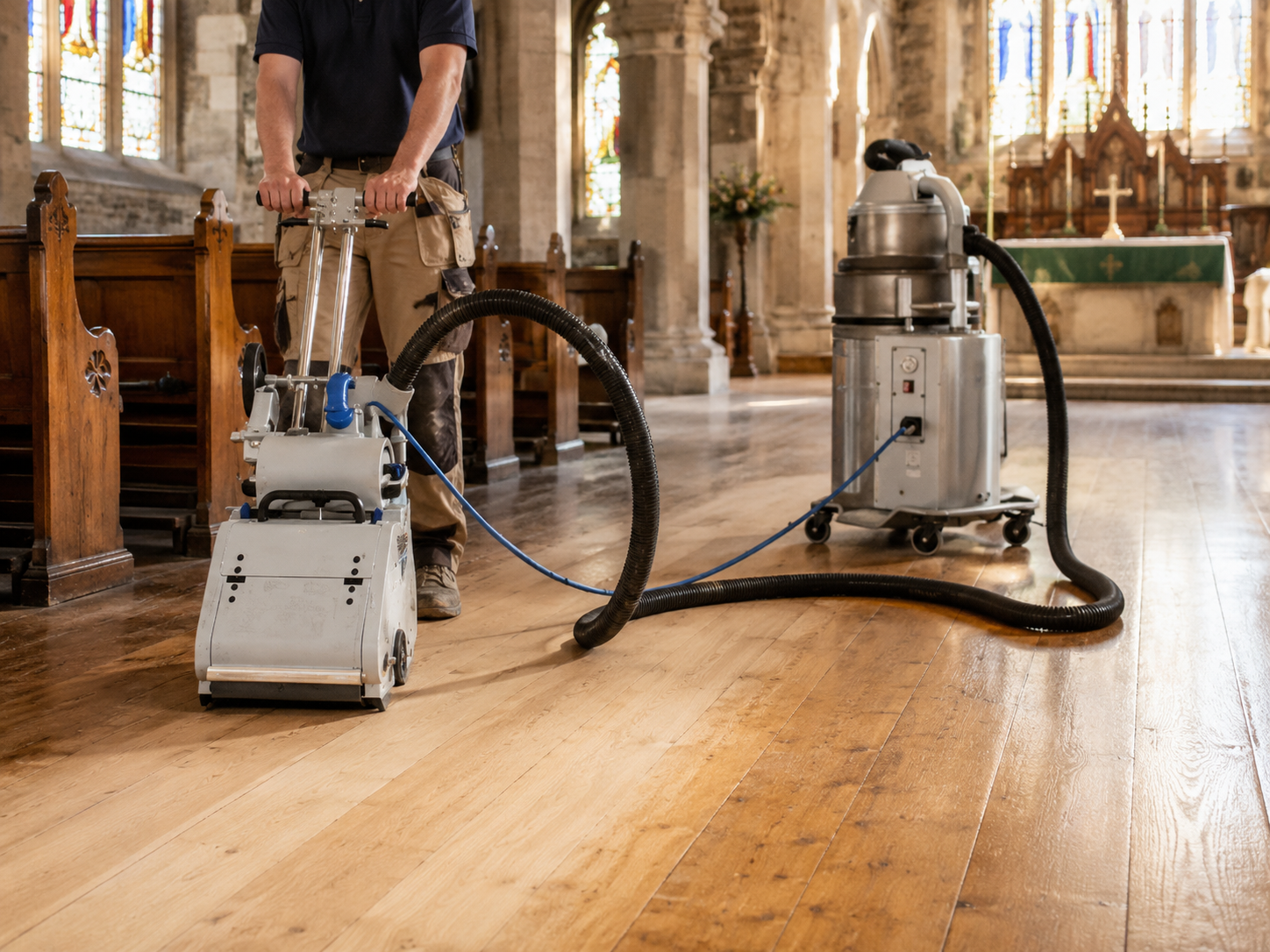
Professional dust-free floor sanding in a historic church using commercial-grade sanding and extraction equipment to prepare the timber floor for a premium protective finish.
4. Finishing Options: Lacquer, Oil, Hardwax Oil and 2K Systems
Choosing the right finish matters more in a church than almost anywhere else, because the floor has to cope with everything from stiletto heels at a wedding to muddy boots at a harvest festival, while still looking right in a heritage setting.
- Hardwax oil (we typically specify Osmo) penetrates the timber rather than sitting on top of it, giving a natural, low-sheen look that suits older pitch pine and oak. It’s breathable, which matters in a building without constant heating, and localised wear can be spot-repaired without resanding the whole floor.
- Water-based lacquer, such as Bona Traffic HD, forms a tougher, more sealed surface that copes well with the heaviest traffic zones — main aisles, porches and entrance lobbies — though it generally needs a full recoat rather than a spot repair once it eventually wears through.
- 2K (two-component) lacquers offer the highest level of chemical and abrasion resistance and are worth considering where a church hall or extension is a genuinely multi-use space, hosting anything from toddler groups to badminton.
- For sprung floors or hall extensions built for more active use, we also work with commercial-grade systems from manufacturers such as Junckers, particularly where a floor needs to perform under sports or event use as well as look the part on a Sunday.
We’ll talk through the trade-offs with you rather than defaulting to one finish — our guide comparing Bona and Osmo finishes covers this in more depth if you’d like to read further before we visit.
5. Aftercare and Ongoing Maintenance
A newly sanded floor is only as good as the maintenance plan behind it. We’ll leave you with clear, product-matched cleaning guidance — the wrong cleaner, or a wet mop on an oiled floor, can undo months of protection — and a realistic view of when a light screen-and-recoat will extend the finish’s life before a full resand is ever needed again. Good barrier matting at the main entrance makes a bigger difference than most people expect, simply by keeping grit (the real enemy of any wood floor) from being walked in on wet Sundays.
For PCCs and church wardens planning ahead: Church wood floor maintenance Kent scheduling — built around your actual pattern of use rather than a generic timetable — is usually the difference between a floor that needs attention again in five years and one that lasts fifteen. Our aftercare guide to Osmo and Bona maintenance has more detail on day-to-day care between visits.
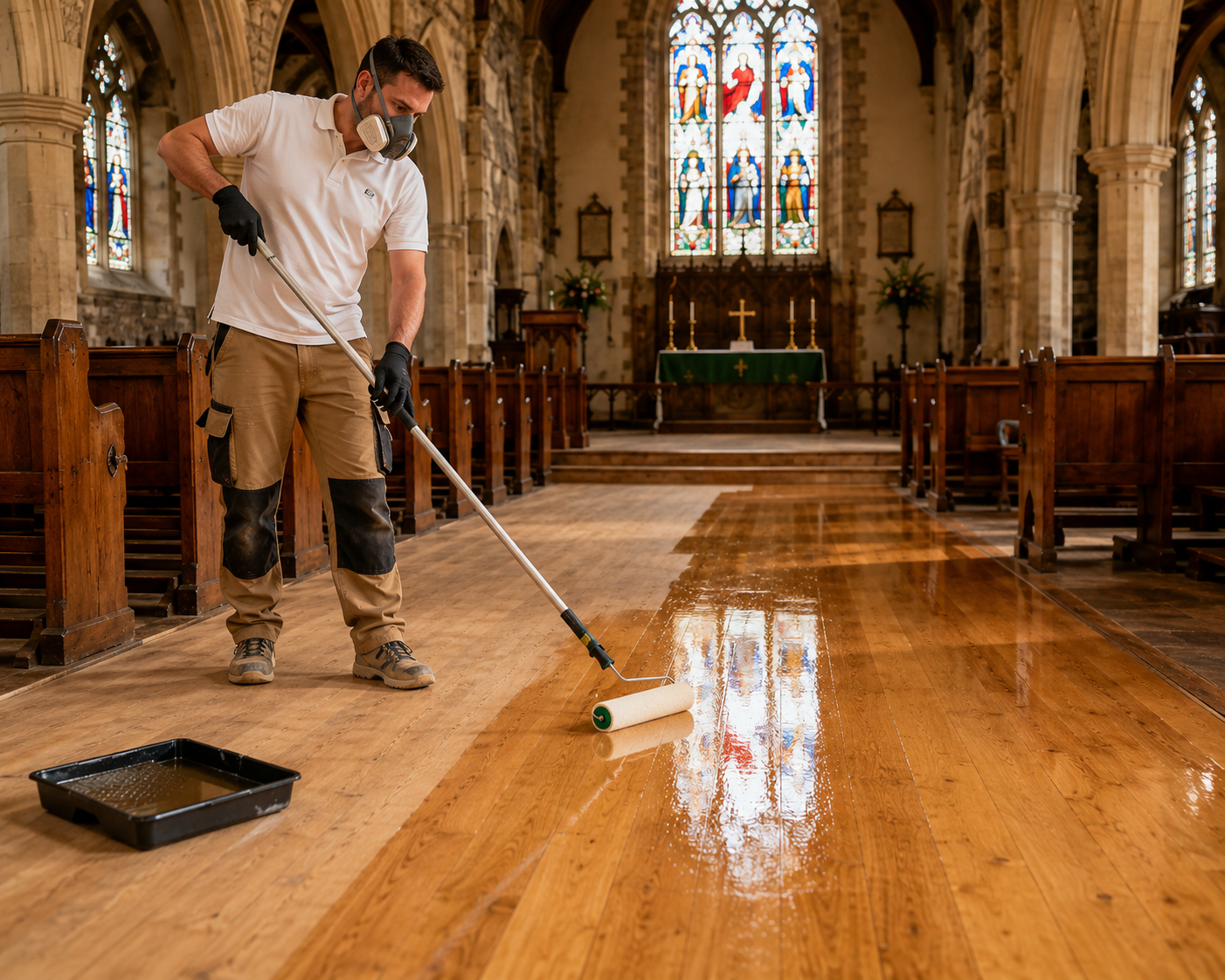
Professional application of premium lacquer to a restored church timber floor, creating a durable protective finish that enhances the wood’s natural beauty while preserving the character of the historic church interior.
Why Churches, Halls and Schools Across Kent Choose Us
We’ve spent more than 20 years working on wooden floors across Kent, from private homes to school halls, sports halls and church buildings, and that range of experience matters when it comes to a building as individual as a parish church. A few things worth knowing before you choose a contractor:
- Heritage and commercial experience combined. We’ve restored everything from Victorian pitch pine in listed buildings to large-scale floor sanding and wood floor restoration projects in schools and sports halls. Many of the same durability and dust-control considerations apply to a busy church hall as to a school hall — you can see that kind of work in our school hall floor restoration and commercial floor sanding for Kent schools and sports halls write-ups.
- Dust-controlled machinery and safe working practices throughout, including method statements and risk assessments we’re happy to provide in advance for insurers, PCCs or DACs who need them.
- Flexible scheduling around services, funerals, weddings and community lettings, including working in phases so part of the building stays usable.
- Premium, trade-grade products from established manufacturers including Bona, Osmo and Junckers, specified to suit your timber rather than a one-size-fits-all approach.
- Honest advice based on condition and use — we’d rather tell you a floor needs a light maintenance oil than sell you a full resand it doesn’t yet need.
- A straightforward quote process, using photos, videos and measurements for simpler jobs, or a site visit for anything more involved.
- Fully insured for public liability, which matters when work is taking place in an occupied public building with regular footfall from parishioners, staff and visitors of all ages.
- Guaranteed workmanship on every project, backed by real feedback from Kent customers, which you’re welcome to check for yourself on Google or Facebook before you get in touch.
When you’re weighing up a Church floor sanding contractor in Kent, it’s worth asking to see photographs of previous ecclesiastical or heritage work, checking they carry appropriate public liability insurance for working in an occupied public building, and asking how they plan to protect memorials, organs and fixed fittings during the work. We’re glad to answer all of this before you commit to anything — take a look at our gallery or about us page for more on how we work.
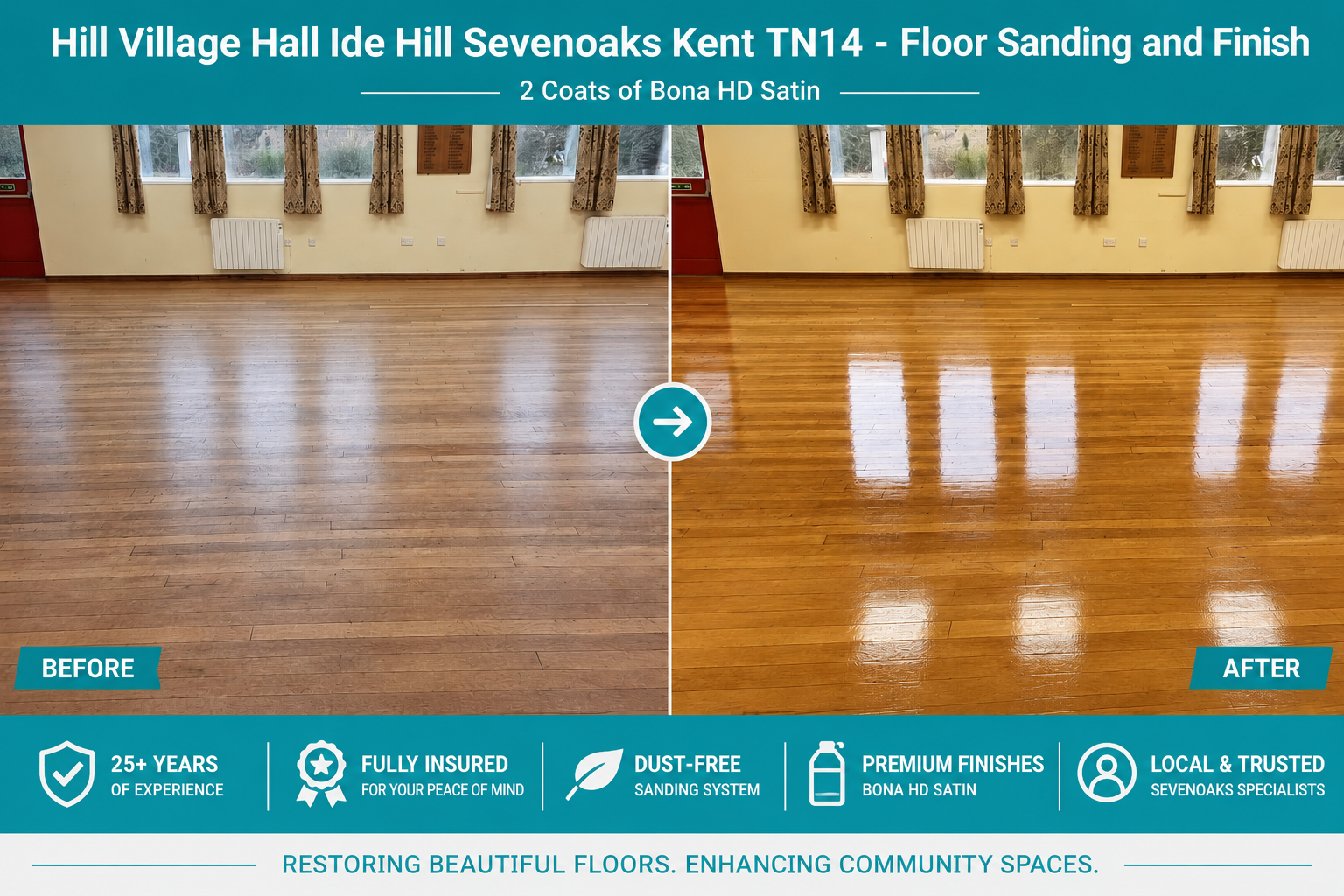
Before & After: Hill Village Hall, Ide Hill, Sevenoaks, Kent TN14 – Professional wood floor sanding and finished with 2 coats of Bona HD Satin for a durable, beautifully restored timber floor.
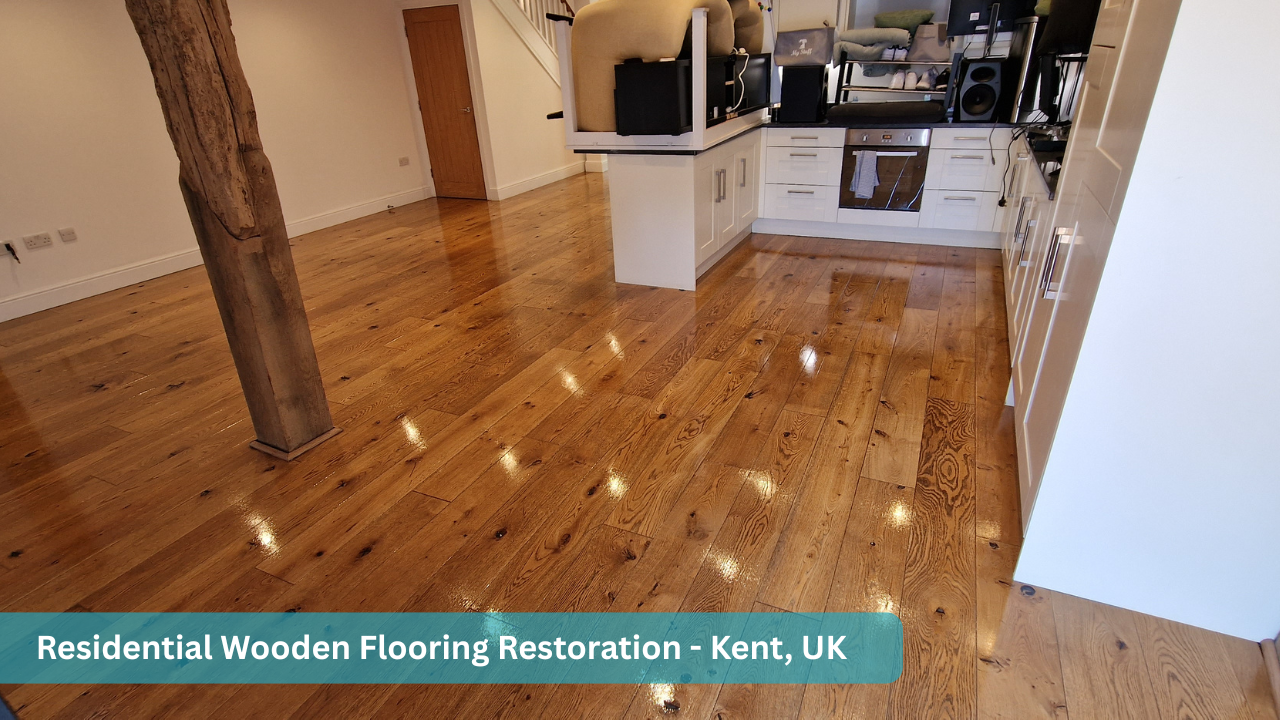
Professional residential wooden floor restoration in Kent, UK, transforming a worn oak floor into a beautifully refinished surface with a durable satin finish that enhances the home’s natural warmth and character.
Working Around Your Church’s Diary
We know a church is rarely “closed”. Even outside Sunday services, buildings are often in use for choir practice, toddler groups, funerals arranged at short notice, community lettings and PCC meetings. Wherever possible, we plan work in phases — one aisle or bay at a time — so the building can stay in partial use, and we work weekday hours around your service and events calendar rather than the other way round. If your church hosts a church school, nursery or regular community bookings, we’ll factor those commitments into the schedule too, and we’re happy to talk through timing well ahead of any faculty application or fundraising deadline you’re working to.
Getting a Fast, Accurate Quote
For most churches, we can put together an accurate estimate from a handful of photos, a short video walking the floor area, and basic measurements, sent by WhatsApp, email, or through our quote request page. This is usually enough for straightforward sanding and refinishing work. Where there’s suspected damp, loose parquet, or the building is listed, we’ll arrange a site visit so we can check moisture levels and subfloor condition properly before giving a firm price. You can also see typical costs on our pricing guide, or request a callback if you’d rather talk it through first.
Frequently Asked Questions
Do you need to close the church while the floor is being sanded?
Usually not entirely. We plan work in phases — one aisle, bay or side chapel at a time — so services and regular lettings can often continue elsewhere in the building. For a full nave resand, we’ll agree a short closure window with you in advance and explain exactly what won’t be usable, and for how long.
How long does church floor sanding take?
It depends on the size of the floor, the extent of any repairs, and the finish chosen. A single aisle or side chapel might take two to three days including drying time; a full nave resand with repairs and a multi-coat finish is more often a week to ten days. We’ll give you a realistic timeline as part of your quote, built around your service diary.
Will we need Diocesan Advisory Committee (DAC) or faculty approval?
Often yes, if the church is listed or the proposed work counts as an alteration rather than routine maintenance — this varies by diocese and by the scale of the work. We’re used to supplying the product specifications, method statements and photographs that DACs typically request, though the faculty decision itself sits with your archdeacon or chancellor, so it’s worth raising with your DAC secretary early on.
What’s the difference between an oiled and a lacquered church floor?
A hardwax oil finish, such as Osmo, sits within the wood grain and gives a natural look, with local wear areas that can be spot-repaired later. A lacquer, such as Bona, forms a sealed film on top of the wood, giving a tougher, more uniform surface for heavy-traffic areas, but it generally needs a full recoat rather than a patch repair when it eventually wears through. We’ll recommend a finish based on how that particular floor is actually used.
Can you work around Sunday services, weddings and funerals?
Yes — this is standard practice for us. We plan around your calendar from the outset, working weekdays wherever possible, and pausing or rescheduling around fixed events like weddings and funerals that can’t be moved.
How much does church floor sanding cost in Kent?
Costs vary considerably depending on floor area, the amount of repair work needed, and the finish specified, so we avoid quoting a generic per-square-metre figure that wouldn’t be accurate for a church. Our pricing guide gives a sense of typical ranges, and we’ll confirm an exact figure once we’ve seen photos, measurements, or the floor itself.
Do you offer dust-free sanding for occupied buildings?
Yes. Our machinery is connected to HEPA-filtered dust extraction throughout, which keeps dust to a minimum in a building that often has an organ, historic textiles, artwork or soft furnishings nearby.
How often does a church floor need to be resanded?
With the right finish and a sensible maintenance routine — barrier matting at entrances, appropriate cleaning products, and a periodic screen-and-recoat — most well-used church floors only need a full resand every ten to twenty years, sometimes longer. Heavy-traffic aisles and porches tend to need attention sooner than side chapels or vestries.

Ready to Restore Your Church Floor?
Whether you’re a church warden preparing a maintenance plan, a PCC treasurer costing up a heritage grant application, or a hall manager trying to keep a well-used community space safe and presentable, we’d be glad to help. Call us on 0800 335 7565, send photos or a short video via WhatsApp or email for a fast, no-obligation quote, or get in touch through our contact page to arrange a site visit.