Key Takeaways
- Heritage Precision: Victorian pine requires a delicate balance of heavy-duty levelling and sympathetic finishing.
- The Grit Sequence: Start with 40-grit Zirconia for uneven boards; never skip steps in the progression.
- Gap Filling: Reclaimed timber slivers are superior to resin for wider gaps in period properties.
- Finishing Choice: Bona Traffic HD offers maximum durability, while Osmo Hardwax Oil provides a traditional, repairable patina.
There is an undeniable romance to the classic Victorian townhouse. From the intricate cornicing to the soaring ceilings, these properties were built to impress. However, for many homeowners in London and Kent, there is a literal skeleton in the closet—or rather, under the carpet. Original Victorian pine floorboards are often hidden away, smothered by decades of dust, paint, and thick linoleum. When uncovered, they frequently present a sorry sight: cupped, uneven, and riddled with gaps that let in biting British draughts.
The Problem: The ‘Orange’ Floorboard Nightmare
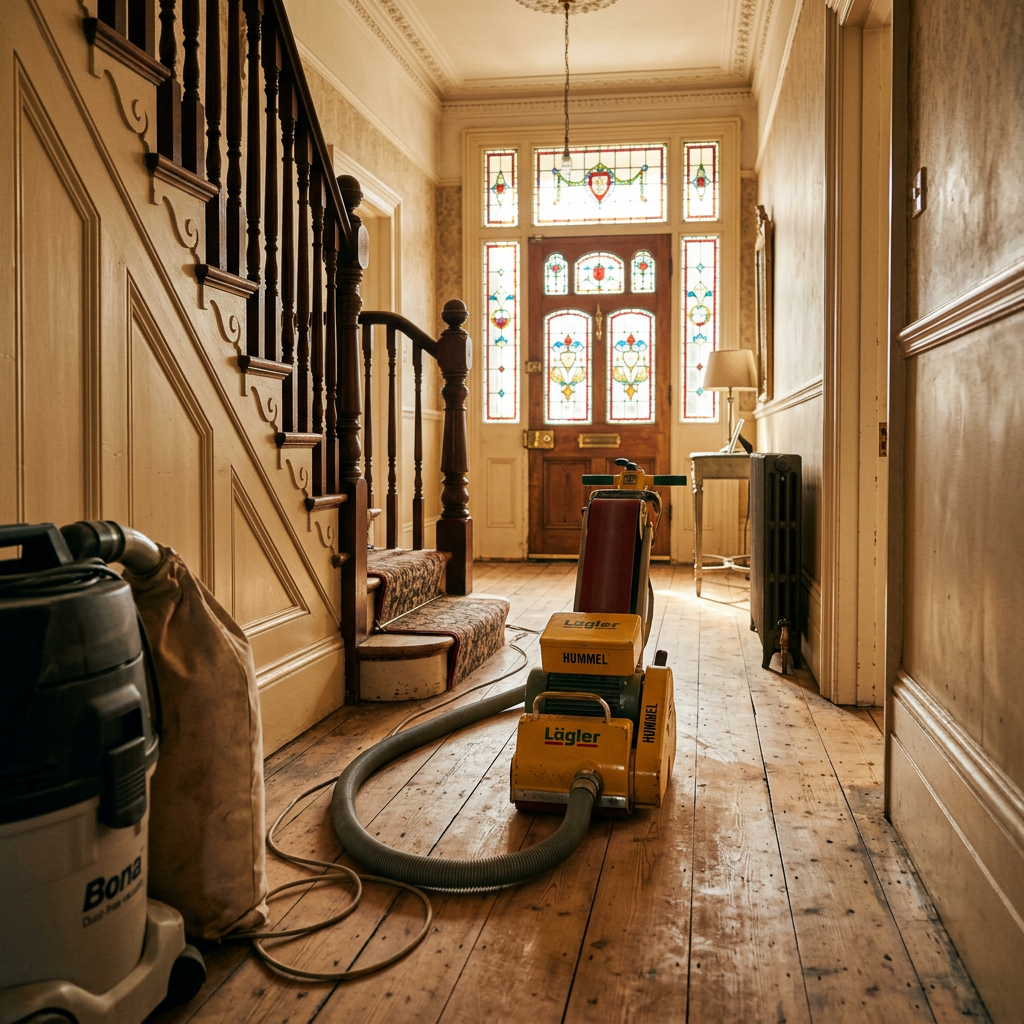
If you have recently pulled back the carpets in your urban townhouse, you likely found floorboards that look more like a construction site than a heritage feature. These boards have often been neglected for over a century. You might see heavy black bitumen around the edges—a relic of the Victorian era when only the centre of the room was carpeted—and layers of lead-based paint that are dangerous to sand without professional dust extraction.
Worse still is the ‘cupping’ effect. Because pine is a softwood, it reacts significantly to the moisture content in the UK humidity. Over 150 years, these boards have warped, creating a ‘washboard’ surface that is uncomfortable to walk on and impossible to clean. These gaps aren’t just an eyesore; they are thermal bridges that suck the heat out of your home, increasing your energy bills and making your living room feel like a wind tunnel.
Agitation: Why a DIY Hack Won’t Cut It
It is tempting to head to a local tool hire shop, rent a drum sander, and spend a weekend ‘having a go.’ However, Victorian pine is notoriously unforgiving. Amateur tradesmen often make the mistake of using standard sandpapers that clog instantly with old bitumen, or worse, they create deep gouges in the timber that are permanent. Because these boards are thin, you only have a limited number of ‘sands’ left in their lifetime. One mistake with a heavy machine can ruin a heritage floor beyond repair.
Furthermore, the dust generated by old floorboards is not just ‘messy’—it is hazardous. Without a certified HEPA-filtered vacuum system, fine particulates will permeate your soft furnishings, curtains, and even your lungs. When you consider the cost of equipment hire, sandpaper (which adds up quickly!), and the potential for a botched job that requires a professional to fix anyway, the DIY route often ends up costing more in time and VAT-inclusive expenses than hiring a specialist.
The Solution: A Masterclass in Heritage Restoration
To truly revive a Victorian floor, you need a content-rich approach that respects the history of the timber. Our process begins with a structural assessment. We check for loose boards, protruding ‘lost head’ nails, and dampness. Once the floor is stable, the real work begins.
1. The Initial Cut: Taming the Washboard
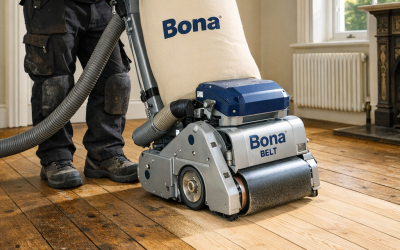
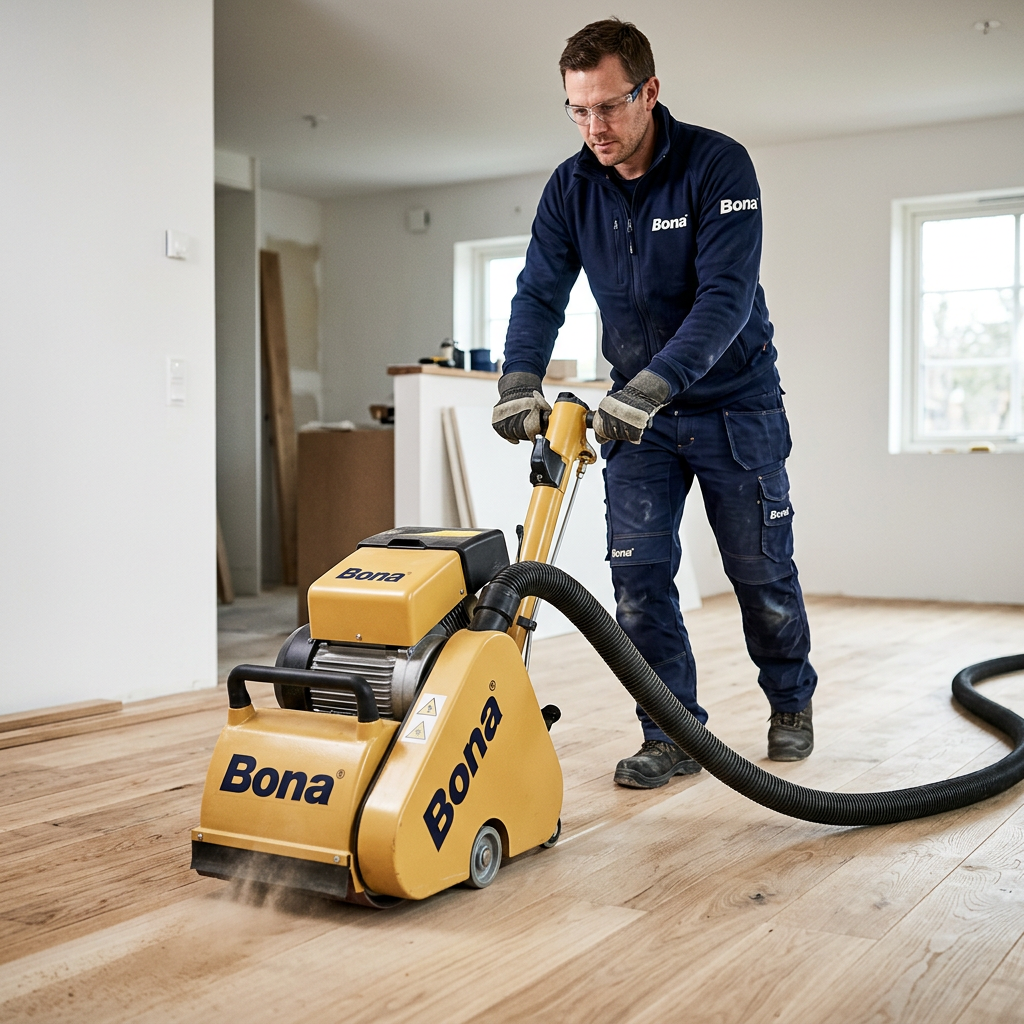
We don’t start with fine paper. For uneven Victorian pine, the ‘Pro-Tip’ is to start at a 45-degree angle to the grain with 40-grit Zirconia belts. This cross-cutting technique levels the ‘peaks’ of the cupped boards much faster and flatter than sanding with the grain ever could. We use the Lagler Hummel, the gold standard of belt sanders, which features an integrated vacuum system to ensure a nearly dust-free environment.
2. Heritage Gap Filling: The Sliver Method
Standard resin gap fillers often fail in period homes. As the house ‘breathes’ and the timber moves, resin cracks and falls through the gaps. For a true heritage restoration, we use reclaimed pine slivers. These are thin wedges of old wood that are glued and hammered into the gaps. Once sanded flat, they become part of the floor, creating a seamless, draught-proof finish that looks entirely natural.
3. Refining the Grain
After the heavy lifting, we move through the grit sequence: 60-grit, 80-grit, and finally 100 or 120-grit. This removes the ‘scratches’ from the previous pass. On pine, grain raising can be an issue if you aren’t careful. We often use a Bona Flexisand with a multi-disc head for the final polish, ensuring the floor is as smooth as glass before any finish is applied.
Choosing the Right Finish for UK Homes
In the humid UK climate, the choice of sealant is critical. You have two main contenders: Water-based Lacquers and Hardwax Oils.
- Bona Traffic HD: This is our go-to for high-traffic hallways. It is a two-component lacquer that is incredibly tough. It won’t yellow over time, preserving that fresh, pale pine look. Curing time is impressive; you can walk on it in socks after 8 hours, though full chemical cure takes about 3 days.
- Osmo Polyx-Oil: If you want a more traditional feel, a hardwax oil is superb. It penetrates the timber, enhancing the ‘tannin pull’ and providing a rich, organic warmth. The major benefit here is ‘spot repairability’—if you scratch a small area, you can buff in a little more oil without re-sanding the whole room.
Pro-Tip: To avoid ‘tannin pull’ or blotchiness on pine, always apply a dedicated primer like Bona Classic UX. This stabilizes the wood and ensures the topcoats bond perfectly.
Why Local Expertise Matters in Kent and London
Whether you are in a seaside cottage in Margate or a terrace in Greenwich, local environmental factors matter. Coastal air can affect drying times, while urban pollution can settle on ‘wet’ finishes if ventilation isn’t managed. Our wood floor sanding specialists understand these nuances. We don’t just sand; we restore history.
Conclusion
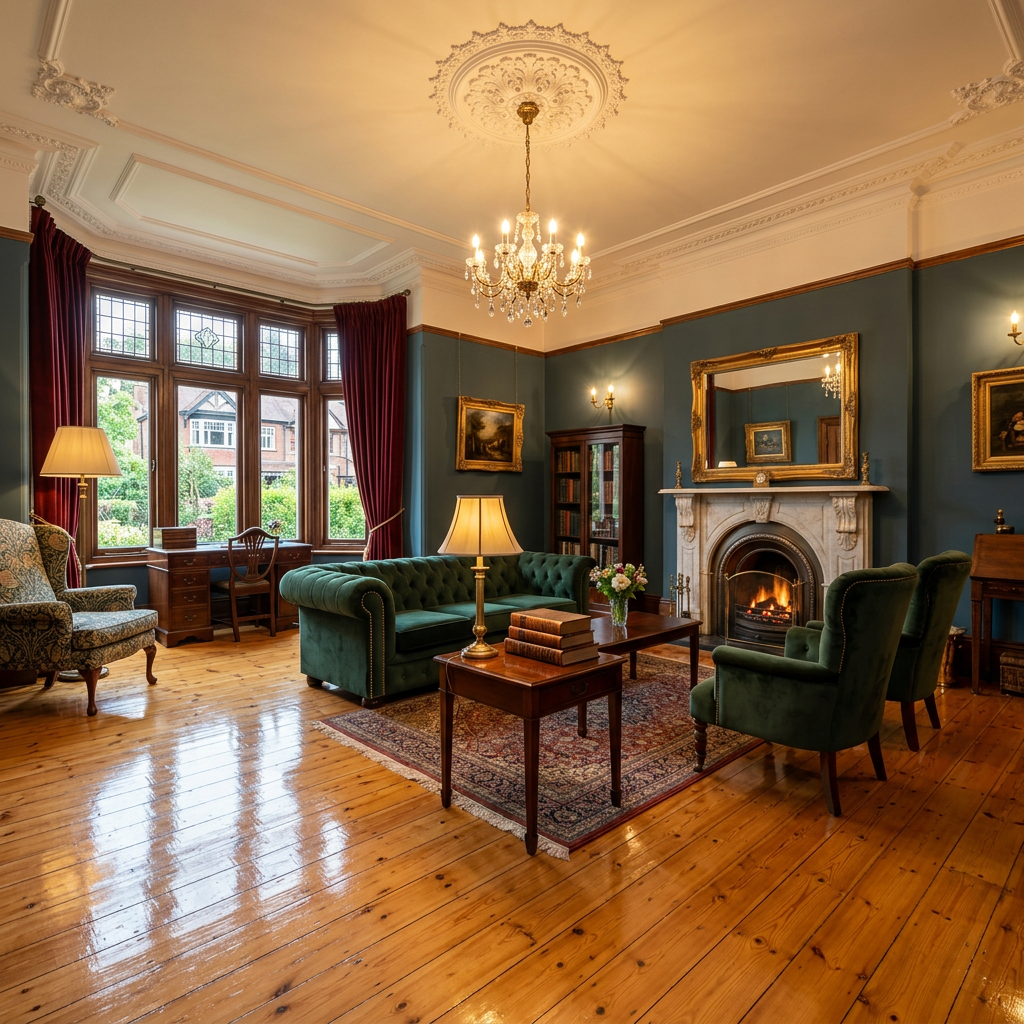
Restoring your original Victorian floorboards is one of the best investments you can make in your property. It adds value, improves hygiene, and creates a stunning focal point that modern laminates simply cannot replicate. If you’re ready to stop shivering from those under-floor draughts and start enjoying the warmth of heritage timber, it’s time to speak to the professionals.
Explore our previous work on reviving dull timber or learn more about our comprehensive restoration services. If you are handling a larger project, our commercial solutions might be of interest. For more technical data on finishing systems, visit the Bona UK website.
Ready for a transformation? Contact us today for a free survey and let’s bring your Victorian floorboards back to life.
Note: All prices are subject to survey and exclude VAT unless stated otherwise.